

Market Update January 2026
 By Chelsea Traver
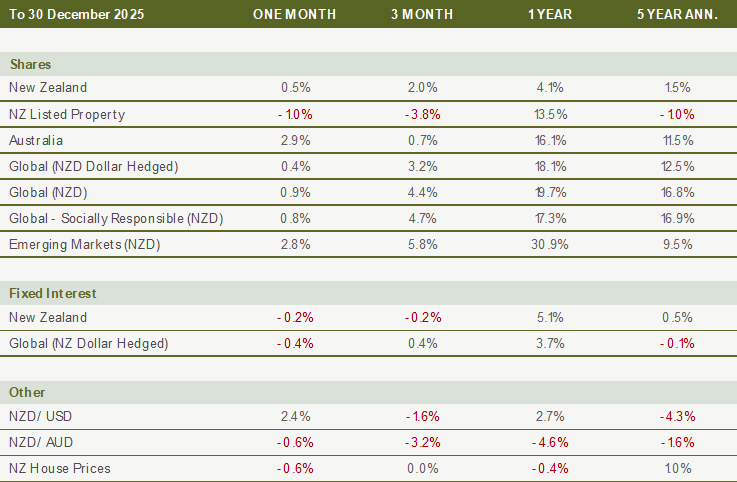
Global share markets
Global share markets closed out 2025 on a positive note, with returns supported by resilient—if unspectacular—economic growth and increasing confidence that the global tightening cycle is nearing its end. While inflation remains above target in several regions, the overall trajectory has been encouraging enough for markets to look beyond peak policy rates and refocus on earnings and valuation fundamentals.
December saw strong performers broaden beyond the US, with European and parts of Asian markets outperforming. In contrast, US equities were more subdued following a 0.25% Federal Reserve rate cut that carried a distinctly cautious tone. The Fed’s messaging pushed longer-term bond yields higher and triggered some rotation away from highly valued growth and AI-exposed names toward more cyclical areas such as financials and materials. This shift reinforced a theme we have seen increasingly through the year: returns have become more dependent on underlying earnings strength rather than simply falling discount rates.
Emerging markets
Emerging markets were a standout, benefitting from firmer commodity prices, improving sentiment toward China, and a weaker US dollar backdrop earlier in the year. Gold was the clear standout asset class for 2025, reflecting a combination of persistent inflation uncertainty, ongoing geopolitical tensions, and continued demand for portfolio diversification.
New Zealand equities continued to lag global peers, though returns were still positive. The NZX50 rose 0.5% in December and finished the year up 4.1%. Performance remained uneven across the market, with select companies delivering solid results despite a subdued domestic backdrop. Freightways, Sanford and Heartland Group were among the stronger contributors, while Fletcher Building benefited from tentative signs that activity in the construction sector may be stabilising after a prolonged downturn. As has often been the case in smaller markets, stock-specific factors were more important than broad economic momentum.
Bond markets
Bond markets softened into year-end following strong gains earlier in 2025. Interest rates edged higher as central banks emphasised that policy easing would be gradual and data-dependent, particularly with inflation not yet firmly back within target ranges. New Zealand bonds declined modestly in December but still outperformed local shares over the full year, marking the third time in four years that defensive assets have delivered competitive returns. This remains a timely reminder of the value of diversification and maintaining exposure to assets that behave differently across market cycles.
